Every Sunday, I’m going to try to post a rundown of what’s ahead for next week in terms of Chicago-area transit, appropriately named Week Ahead In Transit (WAIT). Here’s what’s coming up this week.
On the ‘L’:Red Line trains may be single-tracked between Grand and Cermak-Chinatown overnight.
Northbound Brown Line trains may use the Red Line tracks at Belmont late night.
On CTA buses: A handful of minor reroutes, but nothing too major.
On Pace: Some minor reroutes and stop relocations are occurring, but nothing too major.
Pace launches bus-on-shoulder operation on the Edens on Monday. Routes 620 and 626 will be allowed to use the right shoulder of the Edens between Foster Avenue and Skokie Highway.
Modified schedules begin tomorrow (Monday, April 9) on the UP-N line to accommodate for construction. Metra will be replacing a dozen century-old bridges on the North Side of the city and will need to do some single-tracking.
Elsewhere:IDOT and the City of Joliet will be hosting a public meeting for the Interstate 55 at Illinois Route 59 Access Project on Wednesday (April 11) night. The meeting will be held in Building U at Joliet Junior College from 4pm to 7pm.
For weekday midday travelers on the Milwaukee North line during the month of April, Metra’s implementing a bus shuttle between Grayslake and Fox Lake to perform some track maintenance. On most other lines, when tracks need maintenance they’ll just run on a modified schedule and change tracks, but the northernmost reaches of the Milwaukee North line are a rare single-track stretch of the system. So Metra is running a bus shuttle between the four outermost MD-N stations and Grayslake instead. And, in classic Metra style, it couldn’t be more ineffective: the bus shuttle will stop at the four outlying stations at or near the scheduled train times, but inbound buses will miss the connection at Grayslake and riders are expected to wait until the next inbound train, which runs 45-60 minutes later. I can’t make this up.ย I’ve always joked that Metra focuses on moving trains instead of moving people, but come on man. From the schedule, it’s clear that Metra expects the (single) bus in the shuttle to operate just like the train it’s replacing, but either hold the inbound train from Grayslake to pick up the people being bused or hold the bus at Fox Lake and issue a bus schedule that makes a timed transfer to the following train at Grayslake.
But, of course, Metra doesn’t employ any staff who schedule buses like the CTA or Pace do. (Not that this would be a terribly hard schedule to come up with.) But that leads me to a more holistic question on the three transit boards that make up our Regional Transportation Authority:
What, exactly, would you say you DO here?
Let’s let the agencies tell us, in their own words.
Metra digs in deeper with their corresponding vision statement, which directly jumps to “be a world-class commuter rail agency”. This kind of official mission and vision statement paints Metra into a bit of a corner: they run trains, and any solution they offer needs to be steel-wheel-on-steel-wheel. The closest Metra came to breaking that paradigm was in the old plans for the STAR Line, which would run smaller, independently-powered train cars known as Diesel Multiple Units, or DMUs, which are functionally similar to the trains on the Electric Line but powered by diesel instead of overhead wires. (This is partially why our advocacy group is named Star:Line.) The STAR Line would have run on new tracks along Interstate 90 between Rosemont and near where the Sears Center is now, then use the Elgin, Joliet, and Eastern (EJ&E) railroad paralleling the Fox River Valley down to Joliet. (The nail in the coffin for the STAR Line was the Canadian National Railroad buying out the EJ&E and using it as their freight bypass of Chicago, which greatly increased the number of trains on the EJ&E, precluding transit service.)
But now Pace is starting to creep into Metra’s wheelhouse with their express bus offerings along Interstate 55 and Interstate 94 starting next Monday. Pace, which is now allowed to pass slow traffic on I-55 by hopping onto the shoulder, expanded their bus ridership in the I-55 corridor by 600% since their on-time performance percentage jumped from the low- to mid-60s to over 90%.ย Simply stated, Metra can’t compete: the I-55 corridor runs through a gap in Metra service (except the Heritage Corridor, which is restricted to three inbound and four outbound trains a day due to track congestion), offers free park-and-ride lots, and has fares significantly lower than Metra from the southwest suburbs. The model probably isn’t sustainable — Pace doesn’t make money on free parking — but the numbers don’t lie, the service is successful. (It’ll be fun to watch the effect of the I-55 managed lanes once they get built — and fun to see what happens during construction, if Pace buses can maintain their priority.)
The agencies within the RTA aren’t known for their close coordination, and Pace’s downtown express services are a great example of that. Metra’s board has publicly mused as to whether Pace is “stealing” Metra riders. Luckily, the RTA’s best kept secret has the answer to that. Pace’s monthly ridership data — as well as Metra’s and the CTA’s — are all posted there on RTAMS, and the data is pretty clear: as Pace ridership in the I-55 corridor exploded, Metra’s southern feeder routes for the BNSF Line lost ridership. (See the disclosure at the end of this post for important side notes.) Intuitively, it makes sense: Pace and Metra don’t have a coordinated fare structure (other than a discounted bus pass you can tack onto a Metra monthly ticket, which is poorly publicized on Metra’s website and hides under the “Ventra app” tab), so the incentive to take a Pace feeder route to Metra depends solely on whether it’s cost-effective in some other way: if the round-trip bus trip costs less than daily parking in Naperville, Lisle, or Downers Grove (spoiler: it doesn’t), or if the park-and-ride lots in those communities fill up too early and there’s a scarcity of parking — which does actually happen. (Crazy to think that parking scarcity would encourage transit use… someone should really look into that.) So why would you pay to park at a Metra station, or take a Pace bus to get onto a Metra train, when you can just drive down to the I-55 corridor, park for free, and take a one-seat trip to downtown for less cost than a Metra trip? (The answer is “because Metra goes really really fast during rush hour“, but that’s an equation that gets less favorable the further away you live from the BNSF.)
Now we can start thinking a little more holistically: Metra is worried about Pace “stealing” Metra riders, but Metra’s train-only focus puts blinders on potential solutions. In a perfect world, with three different transit agencies under the same umbrella, the three would have better specialization of tasks. And you could argue that they are specialized: Metra runs trains, Pace runs buses, and CTA does both. But since Metra and Pace don’t have coordinated fares, the system in the suburbs will never reach its peak efficiency for the feeder route dilemma previously mentioned. But there is a solution:
Divide the three agencies by market segment, not by service offered. The old saying goes, when you have a hammer, every problem looks like a nail, and that’s what we’ve been seeing with Metra and Pace. Metra runs trains; their options to improve suburban transit service almost exclusively revolve around line extensions and capacity improvements. Pace runs buses; their options to improve suburban transit service revolve around making buses run faster and more reliably. That’s not to say either of those approaches are inherently bad, but the system can’t live up to its potential when the two systems don’t play nicely with each other.
So here’s how I would reorganize the three agencies:
CTA: Focus on intra-Chicago/inner-ring suburban trips.
Metra: Focus on suburbs-to-downtown trips.
Pace: Focus on suburb-to-suburb trips.
In Pace’s defense, they’ve been doing a great job with this goal already. Pulse is rolling out along the first few arterialsย (although it’s not true “bus rapid transit” as they’ve occasionally advertised), and the enhanced I-90 service feeding into Schaumburg and Rosemont effectively serves as the east-west portion of the original STAR Line plans. But maybe Pace would be better off leaving the feeder bus routes to Metra, so Metra could offer fare-coordinated service with better timed transfers to their trains. Metra could take over the Interstate 55 corridor buses and operate them as an extension (or even replacement) of the Heritage Corridor, freed from the restrictions of the heavy rail traffic in that corridor with more flexibility to add service to the southwest suburbs, which desperately needs more high-speed transit options to Chicago.
And then there are the off-peak potentials. This may sound sacrilege for someone who built this website around organizing train crawls, but a fleet of Metra buses could allow Metra to right-size off-peak service in the outer fringe of the service area and improve frequency in their more profitable and higher-ridership bands. For instance, imagine if instead of running weekend UP-NW trains out to Harvard, you could stop all the trains at Crystal Lake and give free transfers to buses to Woodstock and Harvard (and hell, maybe McHenry too, which currently has no off-peak service). While Harvard and Woodstock may at first resent losing rail service, stopping outbound trains at Crystal Lake would save 25-29 minutes each way, which means you could save a full hour on a round trip run. Roll that over throughout the entire off-peak and you maybe can have hourly headways all weekend long between Crystal Lake and downtown.
Although if there’s anything we can learn from Metra’s current foray into bus replacement on the MD-N, maybe we’re still a few more years away from trusting Metra with buses.
Disclosure: As a previous Metra employee, I had a small role in assisting with Metra’s Strategic Plan, but not the Mission and Vision statements. Also as a Metra employee, I performed a thorough analysis of Pace I-55 ridership relative to ridership changes on the BNSF, SWS, and HC Lines. However, as an internal document that has not been approved for public review, ethically I will not use any exact data, figures, or charts from that project here at The Yard Social Club or Star:Line Chicago. But the raw data I used remains accessible on RTAMS, if anyone wants to dive in.
I was initially planning on using my next Diverging Approach entry to discuss fare capping, which is a new kind of fare structure that gets rid of ten-ride and monthly passes in favor of a system of tracking fare purchases which then apply automatic discounts when a rider reaches a certain number of purchases in a designated period of time. Fare capping is a great way to make transit more affordable and attractive for lower-income riders without actually changing ticket prices, since riders no longer need to pay a large up-front fee for a monthly or weekly pass and discounts are automatically applied. GO Transit up in Toronto currently uses this system for their commuter rail service. (GO Transit also uses a proof-of-payment fare collection system similar to CalTrain in the Bay Area rather than Metra’s antiquated conductor system.)
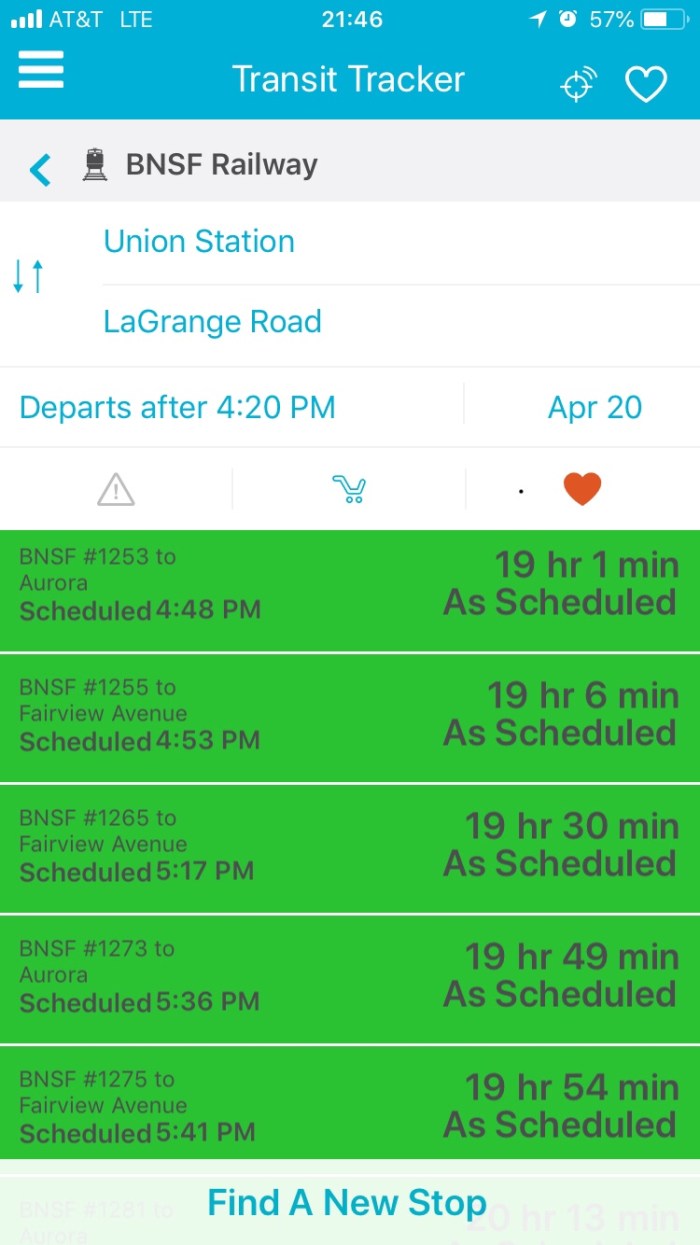
However, two things happened: first, otherpeople in the transit blogosphere created far better media than I could; and second, Metra decided to slide out a new proposed weekday schedule for the BNSF due to Positive Train Control (PTC) coming online. Go ahead and take a look, and compare it to the current schedule. (Weekend schedules are not affected at this time, thankfully.)
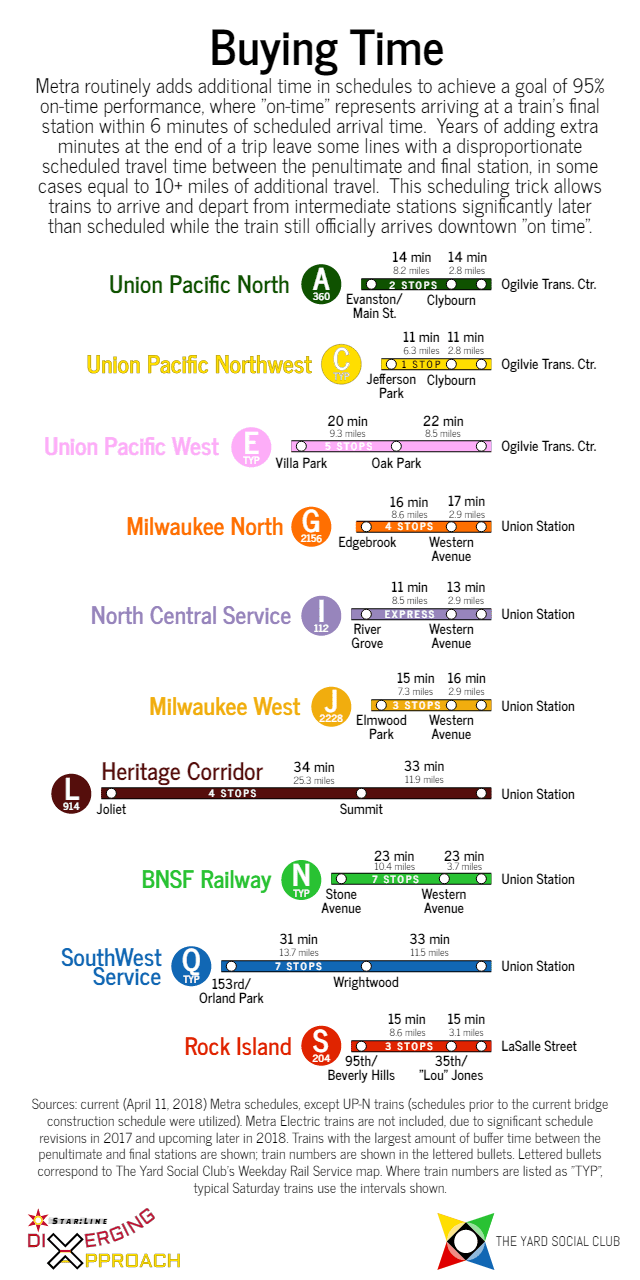
With PTC coming online, trains will need more time to flip at the end of their respective trips. According to Metra’s dedicated FAQ on the updates, BNSF anticipates a minimum required flip time of 12-15 minutes for the train crew to clear the train, check the brakes, have the engineer change ends of the train, initialize PTC, and perform a job briefing before the train can restart. (Why each flip requires a separate job briefing, I don’t know; seems to me like trains can be organized into runs like CTA trains and transit buses and have a single job briefing before the run as a whole instead of at the beginning of each trip.) Giving more time between flips is definitely worth looking at, PTC or not, just to ensure a higher level of service reliability and give trains more buffer time in case they start to fall behind, rather than the cascading delays that are relatively frequent along the congested BNSF corridor.
While popping the hood on the BNSF schedule, Metra rightfully chose to take a look at what can be done about passenger crowding as well, and that’s where things take a very ugly turn. Metra is proposing this new schedule to ease crowding with a particular focus on Naperville and Route 59, and they missed the mark pretty dramatically while making things objectively worse for just about every other station on the line.
One thing to make clear, from a mid-route rider’s perspective: trains feel more crowded in the morning than in the afternoon, whether or not there’s actually more people on the train. The reason is simple: in the morning, whenever you get on the train, if you want a seat you have to find what’s available based on passenger loads from the stations served by the train before it gets into your station. In the afternoon, on the other hand, if you want a seat, all you have to do is get to the train a little earlier since the train starts out empty in Union Station.
Any regular commuters from Naperville will tell you that even with the Aurora-Route 59-Naperville super-express trains in the morning, seats can be tough to come by. The proposed Metra BNSF schedule does not do much to address this: a ninth inbound express train was added to the schedule, but at the expense of moving the last inbound express train later to arrive at Union Station after 9:00am, as well as moving a second express train serving Lisle-Hinsdale after 9:00am, and moving a third express train serving Fairview Avenue-Congress Park to 8:59am. If your workday starts at 9:00am and you currently take those late expresses (which I would guess is a not-small portion of the downtown workforce), the proposed schedules will push those riders back further into the meatier part of the peak period, which may be counter-intuitive if you’re trying to decongest the trains. A better alternative would be to divorce Aurora from the Naperville-Route 59 trains, similar to the existing outbound express scheme. While this would require additional operating time to allow the train to travel the extra distance, it would give greater capacity to your busiest- and second-busiest stations outside of downtown on Metra’s most premium service.
There’s also a bizarre shadow express train running right behind a local-express train (Trains 1248 and 1250, if you’re playing along at home) between Fairview Avenue and LaGrange Road. Train 1250 almost catches train 1248 at LaGrange Road (eight minutes behind!) then follows in 1248’s wake even after 1248 stops at Western Avenue and Halsted Street to arrive at Union Station only five minutes behind 1248. I have no idea what’s going on with that train, other than potentially adding capacity to a handful of stations in the middle of the line (which probably could be accommodated by a longer train instead).
And then there’s the afternoon service, which is supposedly based on passenger loading but looks like Metra’s schedulers just drew stops out of a hat for the express peak service. When you’re trying to get more people to ride your trains, don’t make the schedule more intimidating and complicated.
Metra’s current outbound express pattern on the BNSF is plenty complicated, of course, but it can be grouped into the following general categories (as we’ve done on this site):
The proposed schedule has the following trip formats for the far-out stations, moving from early to late:
2 Downers/Main-Aurora express trips (not bad on the shoulders of the peak)
A Fairview Avenue-Aurora express trip (which, for extra credit, arrives at Fairview Avenue 9 minutes before the local train behind it, which precludes intermediate local trips through Downers Grove)
A Naperville-Aurora express trip (Aurora was split off of these trips a few years ago due to overcrowding issues…)
3 Lisle-Naperville-Aurora express trips
3 Downers/Main-Belmont + Route 59 express trips
A Hinsdale-Route 59 express trip (that doesn’t stop at Belmont, because reasons)
One last super-express Naperville-Route 59 trip
One last Downers/Main-Lisle + Aurora trip
If you live east of Downers Grove, the proposed changes are less dramatic, but maybe more significant. What we call the O-P zone (Congress Park-Fairview Avenue) lose express trains departing Union Station before 5:00pm, with the possible exception of a significantly-later limited train between Union Station and LaGrange Road, moving from 4:37pm to 4:52pm. Congress Park, which has shown relatively dramatic gains in ridership, is rewarded by losing an outbound train. West Hinsdale and Highlands also each lose an outbound afternoon train.
All in all, Metra has an opportunity to dramatically reshape the entire structure of the BNSF schedule to better serve riders (both current and potential new riders) with the introduction of PTC. However, the schedulers are still stuck in the mindset of simply tweaking the current schedule resulting in stopping patterns that resemble Swiss cheese and significantly raise the learning curve for new riders rather than throwing the whole thing out and starting new, which is what needs to be done. Instead of sneaking new trains in here and there and moving station stops from train to train, wipe the slate clean and try something bold. Metra will attract new riders if they made the BNSF easier and more intuitive to understand; or, in the absence of that, if they found a way to tighten up that 12-15 minute flip time and keep the current schedule that we’ve more or less gotten used to. (I’m currently writing this onboard an Amtrak train that flipped in Bloomington-Normal in about seven minutes while discharging and boarding passengers; not sure why that couldn’t be done on a Metra train.)
This schedule is going to really, really piss off people in Naperville, which may not be the constituency you want to piss off since they’re your second-busiest outlying station. Naperville riders deal with crowded morning trains to get their super-express service that gets you from Union Station to Naperville in 32 minutes; they will get their four super-expresses cut in half, with service instead stopping at Lisle and adding eight minutes to the trip – a 25% increase over today’s schedule. Route 59 riders — at Metra’s busiest outlying station — probably won’t be too pleased either, since their trains will also add a stop (Downers/Main and Belmont instead of only Naperville).
Faced with an opportunity to either strengthen the status quo or try something dramatically progressive and different, Metra is taking the bold stance of doing neither. Unfortunately, BNSF riders will bear the brunt of these changes and ridership will suffer.
TL;DR: Metra is making the schedule needlessly more complicated and should be using PTC implementation as an opportunity to reimagine BNSF service from scratch rather than moving the same trains around to make slightly different stops.
If you’d like to give Metra your two cents on the proposed service modifications, send an email to BNSFservice2018@metrarr.comย by April 15. Or, if you want to make a scene about it, there’s a board meeting tomorrow morning at 10:30am.
Daniel Biss, a sitting Illinois state senator and a Democratic candidate for governor, duffed a transit question in a televised debate this week. A moderator asked Biss how much he believed a monthly CTA Pass costs. Biss’s response:
โA monthly CTA pass. Now, letโs see. My Metra pass now comes pretty close to $50 a month. So A monthly CTA pass I would guess is probably around $35.โ
A CTA 28-Day Pass costs $105, more than three times Biss’s guess. Following the debate, Biss’s campaign tried to explain the discrepancy, but duffed that too:
Bissโ campaign later said the Evanston senator โmixed upโ the weekly and monthly pass prices, and was referring to the weekly Metra pass at $55, and the weekly CTA pass at $35.
Metra does not offer “weekly” passes. Metra does offer a 10-Ride Ticket, but if a rider is using all ten rides in a single week, a Monthly Pass is a more cost-effective alternative.
However, it does bring up a valid question for many Metra commuters: when should I buy a monthly pass, and when should I just use 10-Rides?
As part of the most recent (February 2018) fare hikes, Metra adjusted their ticket structure slightly. (Metra is currently studying a more dramatic shift to their overall fare structure.) All Metra fares are based on one-way ticket prices between five-mile-wide fare zones throughout the region, starting downtown at Zone A and radiating out to Zone M in Harvard. From the one-way ticket price, 10-Ride tickets are priced at 9.5 times the cost of a one-way (up from 9x) and monthly tickets are priced at 29 times the cost of a one-way (up from 28.5x).
Since there is a discount for 10-Rides and 10-Rides are good for a full year (except when purchased in January, when many riders try stockpiling to beat the annual February fare increase), a 10-Ride will always be the most affordable per-ride ticket for infrequent riders. However, for more frequent riders, the “sweet spot” is your 30th ride: if a rider takes 30 or more Metra rides in a calendar month, a Monthly Pass will be the better per-ride value. In other words, if you’re commuting downtown at least 15 days in a month, buy a Monthly Pass. This is true regardless of the fare zone.
Of course, since Metra sells Monthly Tickets based on calendar months, even if your work schedule never changes, you may want to change your ticket. A typical month includes 20-22 workdays, but thanks to holidays, vacations, etc. a 18- or 19-day workday month is not unusual. Add in flexible work assignments and that 15-day target can easily become variable between months.
Granted, if it’s that close, you’d probably only save a few bucks here or there, but every dollar counts.
Next up: DA will offer up an interesting tweak to the fare structure that’s probably revenue-neutral but more equitable for lower-income riders.
Welcome to Diverging Approach, the official blog of The Yard Social Club! In addition to regular site updates, I’ll be using this space to post some transit-related ramblings from time to time in the hopes of entertaining, educating, and encouraging changes in the Chicago regional transportation network. This blog will be updated occasionally, but like everything else on this website it’s a labor of love so updates may be in fits and starts.
As for the blog name, I chose “Diverging Approach” for three reasons:
“Diverging Approach” is a railroad signal aspect, commonly shown as a red signal over a yellow signal. This aspect indicates that the switch ahead is aligned for a train to change tracks at low speed.
This blog will likely provide some food for thought for potential ways Metra can improve, literally offering a “diverging approach” to how the railroad is run.
And last but not least, I can easily abbreviate references to Diverging Approach as “DA blog”, which fits right in with everything else in Chicago.
Comments will be turned on for most DA blog posts, so feel free to join the conversation and leave your two cents.ย New Diverging Approach posts will also automatically pop up on The Yard Social Club’s Twitter (@YardSocialClub), so follow along there to not miss an update.
Editor’s Note (Nov 26, 2020): A new version of our map is now available with more details here. This page will be updated accordingly in the near future.
Nothing Metra does can be easy, and their line nomenclature fits right in. Metra operates a legacy network of commuter rail service, and as such most of their lines are named after their host (or former host) railroads. While this serves as a semi-interesting history lesson, it makes for a network that is less than intuitive for infrequent riders.
Metra’s official map is… well, it’s fine. Metra’s online map offerings are more robust, with a GIS base so you can zoom in, click around, and even see individual trains in real-time when you look on a per-line basis.
Metra’s official map, as seen at Chicago Union Station in June 2018.
I had two primary concerns with Metra’s map. First and foremost, it can be confusing — but granted, most of the confusion comes from the line names Metra chooses to use. (More on that in a bit.) But the other issue is that the map makes no effort to delineate service frequency and chooses to focus on regional coverage instead. That’s fine for peak periods (where, admittedly, the lion’s share of Metra’s ridership uses the system anyway), but from the map it’s impossible to know that two of the above Metra lines have no weekend service whatsoever, with another line offering very limited Saturday service and no Sunday service. And then there are the branch lines, which may also have much more limited service. (Or, in the case of the South Chicago or Beverly/Morgan Park branches, they may not.)
You see where this is heading.
Since I can’t leave well-enough alone, I developed my own map and naming scheme for the Metra system. It goes without saying that some of the more creative aspects of this plan are used exclusively on this website, so don’t go asking Metra staff where the Arrow Line is or anything like that. But I may occasionally use our short-hand around Diverging Approach and in our Weekend Guides.
Click the map for a larger view of the JPG. Or click here to see the map as a PDF.
The map, which is formatted to 11″x17″, was conceived as a flower floating on the shore of Lake Michigan. The map otherwise mostly throws local geography out the window, although care was taken to make sure that the respective lines cross in the right places and that the downtown terminals are positioned somewhat correctly relative to each other.
From there, the lines and stations are drawn based on service frequency: generally, the more a line and station looks like the lines and stations on the CTA map, with bold lines and white circles at the stations, the more Metra service that location gets. (Note for the uninitiated: Metra’s off-peak service is nowhere near as frequent as the CTA. The highest frequency we show on our map is “Core Service”, which means service no worse than once every two hours off-peak. That’s also why we used the word “Core” instead of “Good” or “Full” or “Standard”, because any of those terms should be used for off-peak service that’s, you know, good.) As the frequency and/or days of service decrease, the lines get lighter and the stations blend in more with the line behind it, until peak-only services are shown only as light gray dots on a barely-there white line. Our map also looks at what we called “extended service”, where certain trains continue further out into the hinterland at lower frequencies. On the map, these are shown as narrower lines, which indicate that those stations still get service as shown on the map, but not at the same frequency as stations closer to the urban core.
With a hat-tip to the New York City Subway system, I initially developed our naming scheme first based on a lettering system to differentiate Metra from the CTA’s rail lines (which are color-coded) and the CTA and Pace bus networks (which are numbered). Generally, Metra lines are lettered increasing in a counter-clockwise manner from north to south, with groups of letters based out of the four/five downtown rail terminals. I subdivided Union Station into a North Concourse and a South Concourse, based on the raw number of trains that leave Union Station relative to the other terminals. I also divided the Rock Island into two separate lines and the Metra Electric into three separate lines, which I feel more accurately indicates the services offered.
For lines that offer express services during peak periods, the line may have a secondary letter as well. Peak-only supplemental services are identified on our map with either the secondary letter in a diamond (to show express trains) or the primary letter in a square (to show “short-turn” local trains). Generally speaking, all local trains will use the primary letter, and all express trains will use the secondary letter. Since all Metra trains are numbered relatively consistently (outbound trains are odd numbers; inbound trains are even) One of the perks of a lettering system is that individual trains can easily be referred to as a combination of the line letter and train number, which even inline in text can immediately tell the reader basic information about the train in question (e.g., train K2215 is an outbound MD-W train; train R417 is an outbound RI train that does not serve Beverly and Morgan Park).
Let’s be honest: the map is still very confusing, and it’s worth noting that I’m not an expert cartographer. However, that’s also kind of the point of the entire exercise. One of Metra’s biggest strengths in the region also happens to be one of it’s biggest weaknesses: branding itself as a single, cohesive regional network, when in reality each line has it’s own quirks in how service is delivered.
In the most recent update, I also had a little extra fun and refined our suggested proper names for each line as well. Originally, the map referred to trains as “Corridors” that paralleled a major highway heading towards downtown Chicago. That old system had plenty of flaws: the Old Guard wasn’t a fan that we divorced some railroad history from the rail lines, and the Urbanists weren’t terribly happy that we contextualized transit services in terms of highways. (And there were a few difficult choices that had to be made, like having no “Eisenhower Corridor” since both the UP-W and BNSF do the job.) Instead, I put my thinking cap on, dug through the Internet, and came up with something totally unique: names based on former long-distance passenger trains that previously served the line in some way, shape, or form. This had a few benefits:
It’s simple. Each line has an easy-to-remember one- or two-word name.
It honors the past. As a rule, Diverging Approach tries to nudge Metra forward into the future, not backwards into the past, but Chicago’s rich railroad history deserves to be celebrated.
It strikes a balance between the two. One of the biggest critiques of the current Metra naming system is that it’s not terribly intuitive for new riders, and looking at the system as a whole can be way too easy to confuse. For instance: there are two North Lines, two West Lines, and a Northwest Line; there are three lines with “Union” in the name and none of them go to Union Station; the Rock Island and Metra Electric lines can each be better thought of as multiple, coordinated services; there’s dangers of forced future name changes if more railroad consolidation in the market occurs; and so on. Our naming system gets rid of all that and modernizes the system, but still connects back to the original railroads who built the network.
It’s fun. To make things easier to remember and identify, the new naming system also includes individual icons for each line. And better yet, each icon has a corresponding standard-issue emoji for smartphone users because, hey, why not?
Below is a list of our reimagined names (and letters and icons and emojis) for each Metra line.
The Ashland Line Union Pacific North (A) Daily core service to Waukegan with extended service to Kenosha <B> Weekend outbound express trains to Ravinia Park for events
History: The Ashland Limited was a Chicago and North Western train from Chicago to Ashland, Wisconsin, via Green Bay. I was tempted to go with the Flambeau, another C&NW train that used what’s now the North Line, but as a true blue Chicagoan I couldn’t in good conscience go with a name so similar to “Lambeau” on the only line that goes into Wisconsin and has a forest green color scheme to boot. (The forest green color Metra uses is officially “Flambeau Green”. You’ll see I overlapped a few of these line names with Metra’s throwback color names, so I’m hoping that could be a foot in the door to actually making some of these changes.) Plus, the corridor parallels Ashland Avenue pretty closely in the city, so that’s good enough for me.
Line Icon: A fish, being fished. (The Ashland Limited was also occasionally referred to as the Fisherman’s Special or the Northwoods Fisherman.)
Emoji: ๐ฃ
The North Western Line Union Pacific Northwest (C) Daily core service to Crystal Lake and extended service to Harvard <D> Peak period express service to Harvard or McHenry
History: The North Western Limited was the Chicago and North Western’s primary train between Minneapolis-St. Paul and Chicago before the streamlined 400s were used. This one could have also been called “The Viking Line” for the C&NW’s Viking; Metra uses “Viking Yellow” for the color. Honestly, I’m playing a little fast and loose with this one: the North Western Limited used today’s North Line up to Milwaukee before heading to the Twin Cities, but considering it’s currently the Northwest Line that parallels Northwest Highway and used to be operated by the Chicago and North Western, let’s keep this one simple. (And it did operate over the current UP-NW’s tracks between Ogilvie and Clybourn, after all.)
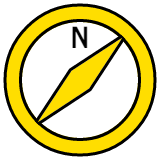
Line Icon: A compass. (And yes the compass is pointing in the correct direction: since the needle always points north, if you’re heading northwest, this is what the compass should look like.)
Emoji: ๐งญ
The Kate Shelley Line Union Pacific West (E) Daily core service to Elburn <F> Peak period express service to Elburn
History: Kate Shelley has a prominent place in railroad folklore. An Irish immigrant living in Iowa in 1881, she overheard a C&NW inspection locomotive wreck into Honey Creek following a bridge washout during a round of severe thunderstorms. Since a passenger train was due through the area later that night, Kate ran through the storm to a nearby train station to alert railroad staff of the wreck. Her quick thinking saved the passenger train as well as two of the crew members from the initial wreck. C&NW would later run the Kate Shelley 400 over what’s now the Union Pacific West Line between Chicago and Iowa. It’s never a bad time to celebrate another brave woman in Midwestern history. (Plus Metra already officially uses “Kate Shelley Rose” as the color for the line.)
Line Icon: A thunderstorm.
Emoji: ๐ฉ
The Marquette Line Milwaukee North (G) Daily core service to Fox Lake <H> Peak period express service to Fox Lake and weekday evening reverse commute express service from Antioch
History: The Milwaukee Road ran the Marquette from Chicago to Madison and points west over what’s now the Milwaukee North (before the Illinois Tollway effectively killed demand for passenger rail service into Wisconsin).
Line Icon: In honor of early Midwestern explorer Father Jacques Marquette, who cut through what’s now Chicago in 1673, this line uses a canoe.
Emoji: ๐ถ
The Laker Line North Central Service (J) Weekday basic service to Antioch
History: Metra’s service now operates over tracks controlled by Canadian National, but way back when, the Soo Line operated The Laker between Chicago and Duluth over this corridor (north of Franklin Park). Interestingly enough, the line between Franklin Park and downtown swung south and paralleled what’s now the Blue Line in Oak Park and Forest Park, which makes a fun corridor to discuss in the context of the O’Hare Express. “The Laker” is also a good name for this corridor since it cuts right up through the center of Lake County.
Line Icon: A sailboat. Maybe on the nearby Chain O’Lakes.
Emoji: โต๏ธ
The Arrow Line Milwaukee West (K) Daily core service to Elgin with weekday extended service to Big Timber Rd (L) Peak period express service to Big Timber Rd
History: The Arrow was the Milwaukee Road’s Chicago-to-Omaha train, which operated over what’s now the Milwaukee West corridor. Metra calls the color “Arrow Yellow” after the train, but personally I feel like “yellow” is a bit misleading.
Line Icon: I used a stylized arrowhead, pointing left (west) as a hat-tip to the current Milwaukee West name.
Emoji: There’s no direct arrowhead emoji and I feel like one of the standard arrows is a little too, uh, direct… but there is a bow-and-arrow, so whatever, close enough. ๐น
The Western Star Line BNSF Railway <M> Mon-Sat peak express service to Aurora (N) Daily core service to Aurora <O> Weekday peak express service to Fairview Avenue
History: I really, really wanted to use the Zephyr here; the last version of the map that I posted in the last blog post still had the Zephyr listed. But, since this line does serve Union Station, and since Amtrak runs both the California Zephyr and the Illinois Zephyr over this same route, I unfortunately decided that it’d be too easy to confuse. I also considered the Mainstreeter, which is just a cool name for a train plus would be pretty representative of the small towns served by this Metra service, but I opted against it since there’s literally a “Main Street” station on this line (as well as one on a different line). That left the Western Star, a Burlington/Great Northern train that connected Chicago to Spokane via Glacier National Park. Plus, hey, a Star Line!
The Abraham Line Heritage Corridor (P) Peak period express service to Joliet
History: It’s nice when history is still current. The Alton Railroad began the Abraham Lincoln in 1935, and since then the operators have changed (from Alton to Gulf, Mobile and Ohio, and on to Amtrak) but the long-distance train keeps rolling today as Amtrak’s Lincoln Service. To distance the Metra line from the Amtrak service, I kept the Abraham and dropped the Lincoln.
Line Icon: Lincoln’s trademark stovepipe hat. If regular Heritage Corridor riders prefer to see it as a tombstone, hey, go for it.
Emoji: ๐ฉ
The Blue Bird Line SouthWest Service (Q) Weekday core service to 179th St with peak period extended service to Manhattan and very limited Saturday service to Manhattan
History: The Wabash Railroad originally ran the Blue Bird (and the Banner Blue, which Metra uses as the color of the line) between Chicago and St. Louis via Decatur. If only the Wabash ran the awesomely named Cannon Ball over this route instead.
Line Icon: It’s a bird’s head. Or at least it’s supposed to be a bird’s head. I’m not good with animals.
Emoji: Another iPhone/Android conflict here: Apple’s bird emoji is actually blue (doesn’t look too dissimilar from my icon, actually); other emoji libraries use a bird that looks more like a cardinal here. When in doubt, add the blue ball in front. ๐ต ๐ฆ
The Rocket Line Rock Island – Main Line (R) Daily core service to Joliet via Blue Island (RS) Daily off-peak core local service to Joliet via Suburban Line
History: When Amtrak was first formed in 1971, the government offered railroads a simple deal: pay a small fee and/or give Amtrak your passenger rolling stock to let Amtrak run passenger service, and in return the freight railroads would no longer be on the hook for providing (money-losing) passenger service. The Rock Island was one of six railroads that opted out of joining Amtrak, continuing to run their famed Rocket trains into the 1970s. In Chicago, the Peoria Rocket and the Des Moines Rocket (later the Quad Cities Rocket) operated over the Rock’s tracks between downtown and Joliet.
Line Icon: A rocket, theoretically flying north-northeast from Blue Island to LaSalle Street Station.
Emoji: ๐
The Suburban Line Rock Island – Suburban Branch (S) Daily core service to Blue Island via Beverly/Morgan Park (RS) Daily off-peak core local service to Joliet via Beverly/Morgan Park
History: Another freebie, the Suburban Line has been known as the Suburban Line (or Suburban Branch, depending on the source) since before the Great Chicago Fire. Since in our lettering scheme the Rock’s Rockets are R trains and the Suburbans are S trains, no need to get too deep in the weeds here.
Line Icon: A single-family house. Picket fence and 2.3 kids not included.
Emoji: ๐
The Panama Line Metra Electric – Suburban Main (U) Mon-Sat core express service to University Park (UV) Daily off-peak core local service to University Park
History: The most famous Illinois Central train that doesn’t have a song written about it, the Panama Limited was one of the most luxurious trains in the country, connecting Chicago and New Orleans over the Illinois Central’s main line. The original train was named after the Panama Canal, which was still being constructed when service first started.
Line Icon: Since the train was named after the Panama Canal, the icon is a (very crude) container ship.
Emoji: ๐ข
The Magnolia Line Metra Electric – City Main/Blue Island Branch (V) Daily core service to Kensington/115th St with Mon-Sat extended service to Blue Island (UV) Daily off-peak core local service to University Park
History: The Panama Limited was one of the most luxurious trains in the country, with an all-sleeper consist. In 1967, as the Panama Limited was losing ridership (along with just about every other passenger train in the nation), the Illinois Central threw a few coach cars onto the Panama Limited and briefly called the coach accommodations the Magnolia Star, probably to try not to sully the luxurious reputation of the Panama Limited. I wonder if there’s some sort of allegory in there for how Metra treats suburban riders vs. city riders…
Line Icon: A simplified magnolia bloom.
Emoji: ๐บ
The Diamond Line Metra Electric – South Chicago Branch Daily core service to South Chicago/93rd St
History: The Diamond represents a few different Illinois Central trains, including the Green Diamond, the Diamond Special, and the Night Diamond between Chicago and St. Louis. While the South Chicago Branch never hosted long-distance trains (for obvious reasons), these trains still share the old Illinois Central main line into downtown north of 63rd Street.