
As of late, Chicago seems to be caught up in something of a megaproject fever:
- The latest iteration of Lincoln Yards, Foundry Park, was approved by the Chicago Plan Commission back in January
- The Chicago Fire FC is finally kickstarting development of The 78, breaking ground this week on a new soccer stadium
- The Quantum Park at the old South Works site continues to progress, with a new coalition of supporters emerging this week
- The 1901 Project, surrounding the United Center, is planning on breaking ground later this year
- The Chicago Park District is pitching $630 million in improvements for a post-Bears Soldier Field
While the Bears continue to suck most of the political oxygen out of the room with their current will-they-or-won’t-they soap opera between Arlington Heights and Indiana, thankfully the city still has a few major irons in the fire regardless of wherever the McCaskeys end up deciding to exploit build.
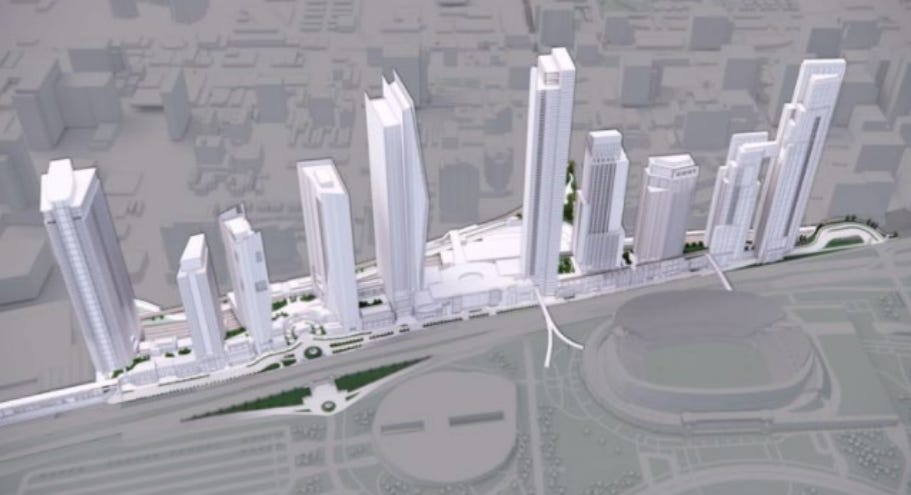
All eyes might be on Soldier Field, but just across DuSable Lake Shore Drive lies another potential megaproject site: ONE Central. A true megaproject, ONE Central was first pitched back in 2019 to add a bunch of skyscrapers over the Metra Electric tracks between McCormick Place and the Field Museum. With a site spitting distance from the Lake and adjacent to the burgeoning South Loop neighborhood, a megaproject to add thousands of commercial, office, and residential tenants on railroad air rights seems to make a lot of sense… unless the pedestal to build it on ends up costing $6.5 billion.
Of course, any rational developer would try their hardest to get the state to pay for that instead of having it come out against their bottom line, and the best way for a developer to make a case for state support to build that sandbox for them to play in is to play up the public benefits of the project. In this case, ONE Central’s pedestal wasn’t simply the base for supertall skyscrapers, but rather it would actually be a world-class transit center for CTA, Metra, NICTD, Amtrak, and anyone else the developer could think of. As a result, the General Assembly passed the Public-Private Partnership for Civic and Transit Infrastructure Act, authorizing the State of Illinois to contribute nearly $6.5 billion for the project.
Unfortunately for the project, transit and transportation advocates were extremely skeptical of ONE Central’s transit-oriented claims, and many of the initial transit projects themselves were dubious: the project would include an ‘L’ branch from somewhere in the vicinity of 17th Junction (where Midway-bound Orange Line trains currently split off from the Green Line), but with no clear indication of how the service would actually operate: is it a new line? Are we adding a branch to the Orange Line or Green Line or Red Line or something totally different? Would these trains go to the Loop or to Midway? Is anything actually constructable over — or under — Canadian National’s freight tracks? Would additional properties beyond the project envelope be needed to tie into the existing network?
On the commuter rail side, the project called for reverse-branching Metra’s busiest line (BNSF), meaning half of Metra’s busiest trains would now miss downtown entirely, cutting across the St. Charles Air Line and terminating at ONE Central rather than Union Station. This would almost certainly be a non-starter for Metra (to say nothing of the significant additional amounts of operating funding, logistics, and additional infrastructure needed to turn and/or lay over rush hour trains somewhere near McCormick Place, also not included within ONE Central’s footprint), and for the suburban communities along the BNSF.
Many readers may also remember that in 2020, there was a global pandemic that dramatically upended day-to-day lifestyles and work patterns in urban cores around the world. Additionally, with the Bears announcing their intent to vacate Soldier Field, the fundamentals of the ONE Central project became even shakier. As part of the state’s due diligence, Illinois commissioned a feasibility study on the project, which was completed in 2025. The results of the study convinced Gov. JB Pritzker to pull the plug on public support for the project entirely. Today, the OneCentralChicago.com website is still live but only consists of a static “coming soon” page that appears to have not been updated since 2023.
Alas, today ONE Central remains a megaproject in search of a megaproject.
A Brief Post-Mortem
Let’s dive back into the latest transit proposal for ONE Central. Prior to the feasibility study’s initialization, ONE Central modified their proposal to drastically lower the public-facing cost to an estimated $2.75 billion, or a 58% decrease from the previous $6.5B price tag. The modified proposal relies on far less decking over the Metra tracks, with more of the key vertical infrastructure on terra firma rather than a bridge deck by shoving the Metra tracks and the McCormick Busway1 as far west as possible within the site envelope.
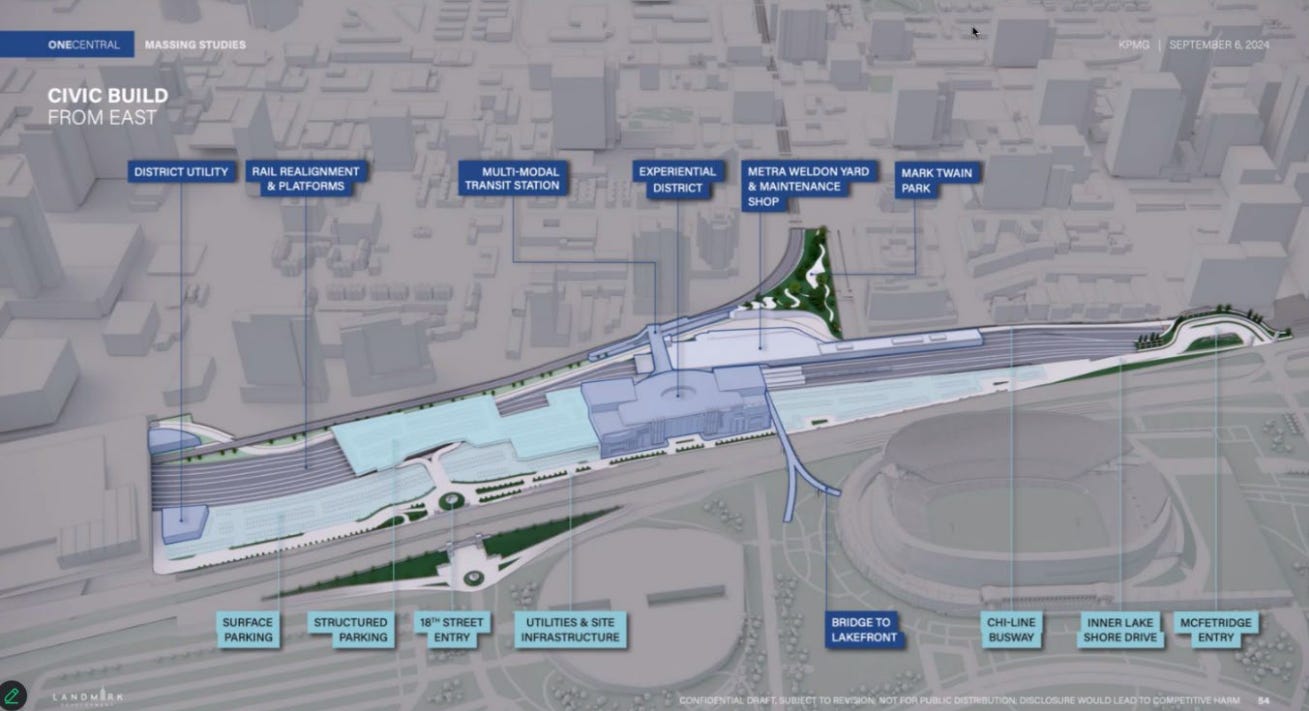
In addition to reducing the amount of decking required, the latest ONE Central proposal also gives up any direct CTA ‘L’ connection, now relying on a “CHI-Line Rail Shuttle”, a train that would connect ONE Central to the Red Line (a new transfer station in the southern portion of The 78 is proposed, but not included in the cost) and to Union Station.
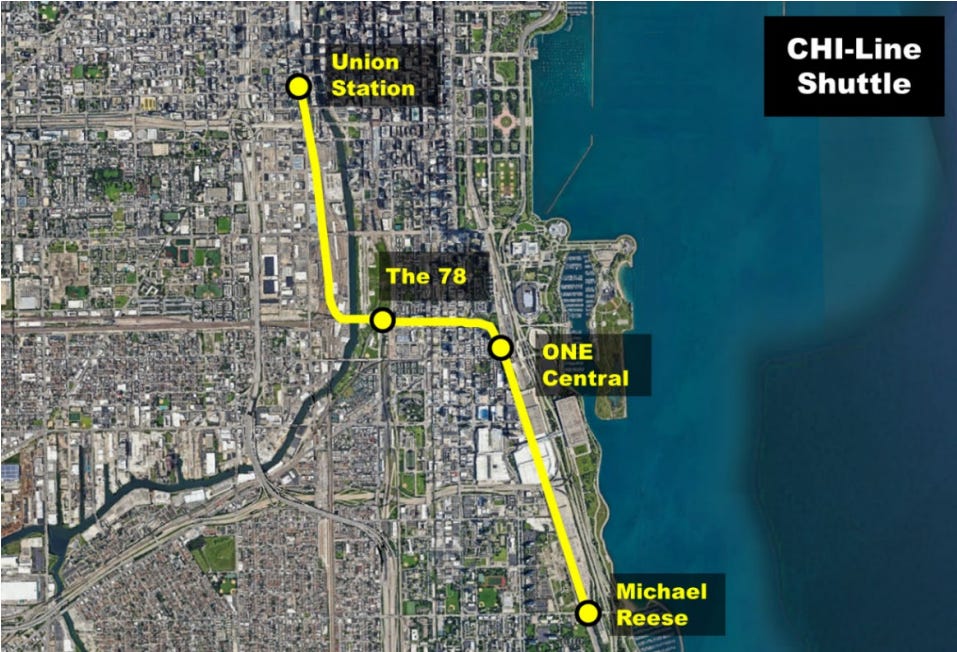
Huh, that map looks vaguely familiar…
The feasibility study notes some potential impacts that could negatively impact the potential success of the CHI-Line Shuttle: namely, the concept relies upon Amtrak’s completion of CHIP, being able to use the St. Charles Air Line bridge, and negating potential conflicts with Metra at the Rock Island crossing as well as freight traffic on the Canadian National line.
Not mentioned in the feasibility study but also a concern: whether a Red Line station at The 78 is financially (and physically) feasible. Where the CHI-Line Shuttle would cross the Red Line, the Red Line is on a downward curving slope between the subway portal near 16th Street and the Roosevelt subway station. Notably, some local neighborhood groups have shifted towards advocating for an infill Orange Line elevated station rather than a Red Line subway station.
Can’t help but wonder if there’s an alternative to the CHI-Line Shuttle that could avoid those potential pitfalls…
Zooming Out
Let’s quickly take a look at some of the other megaprojects discussed in this post:
Foundry Park
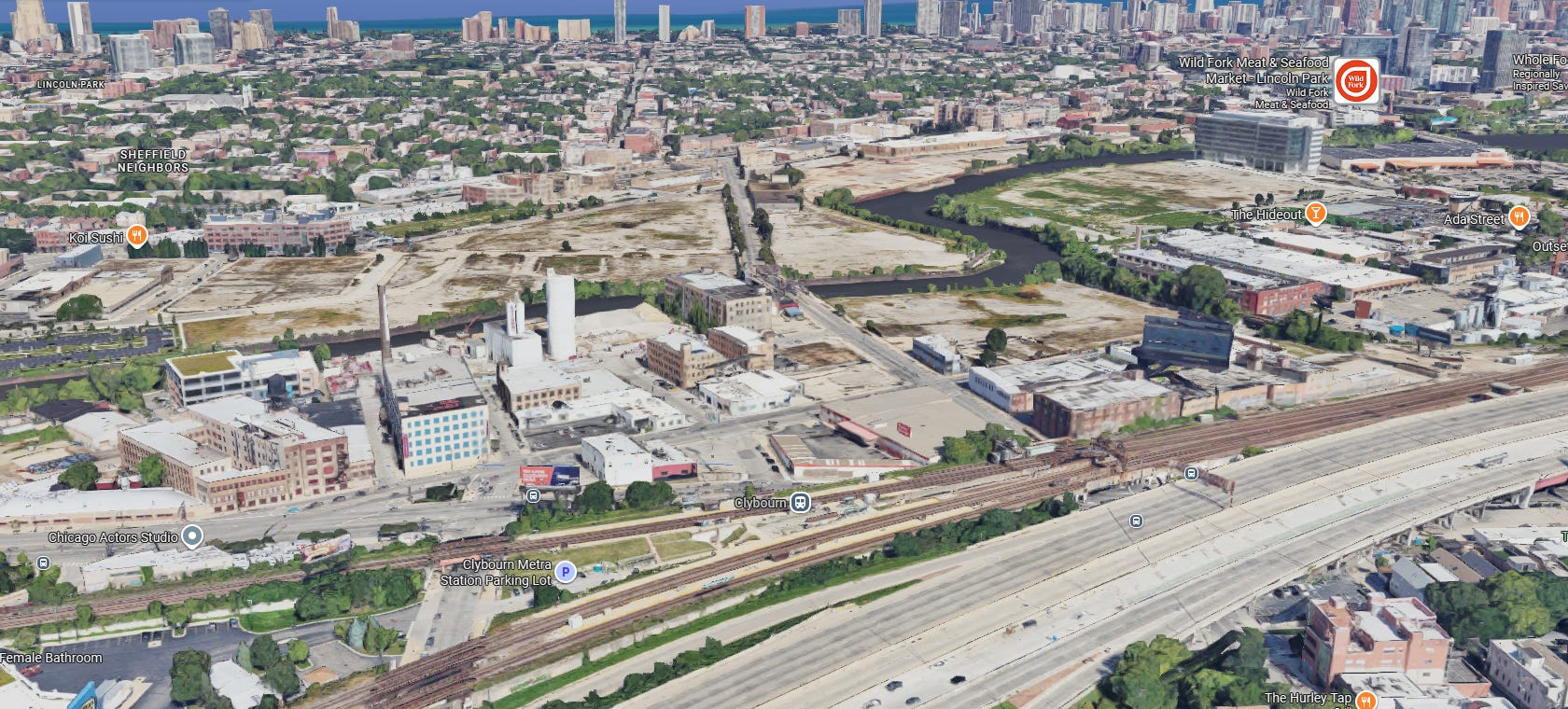
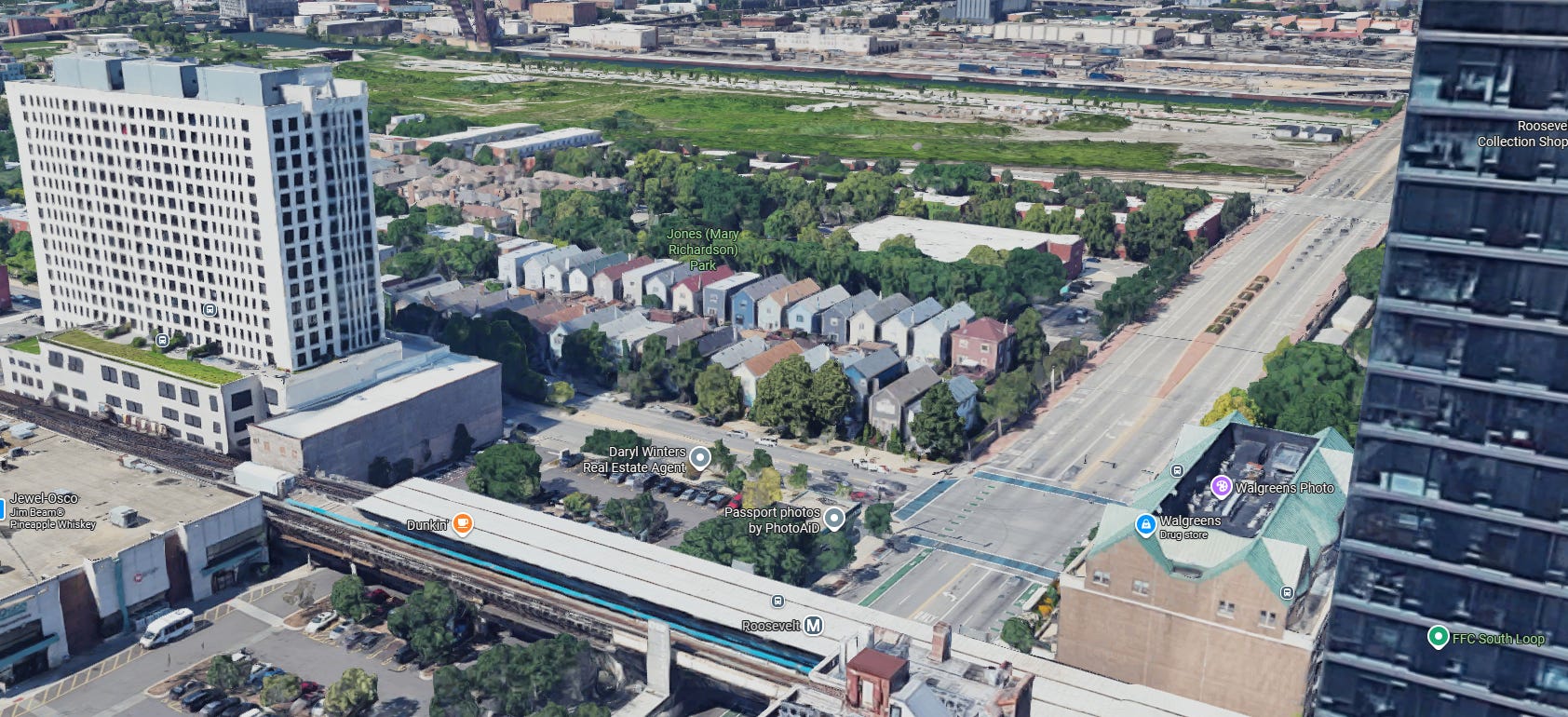
The 78
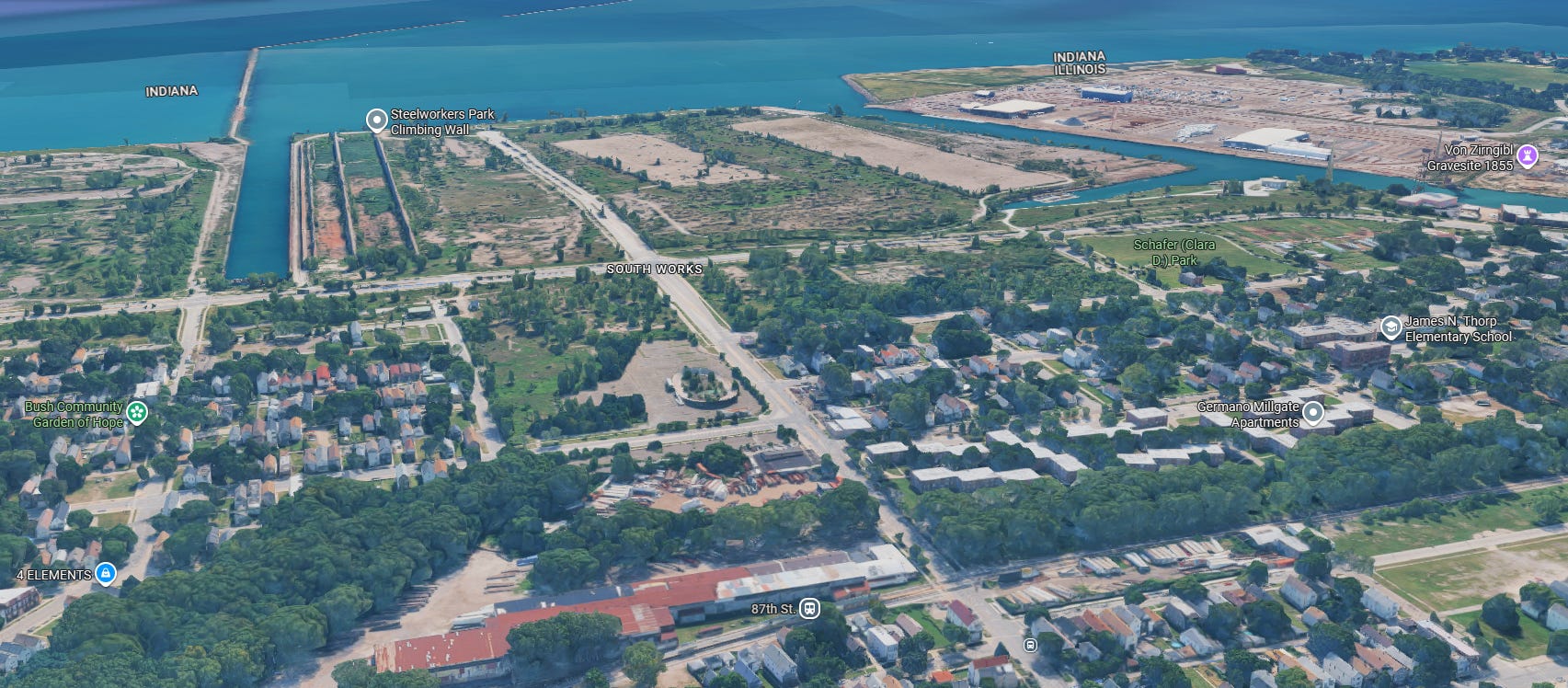
Quantum Park
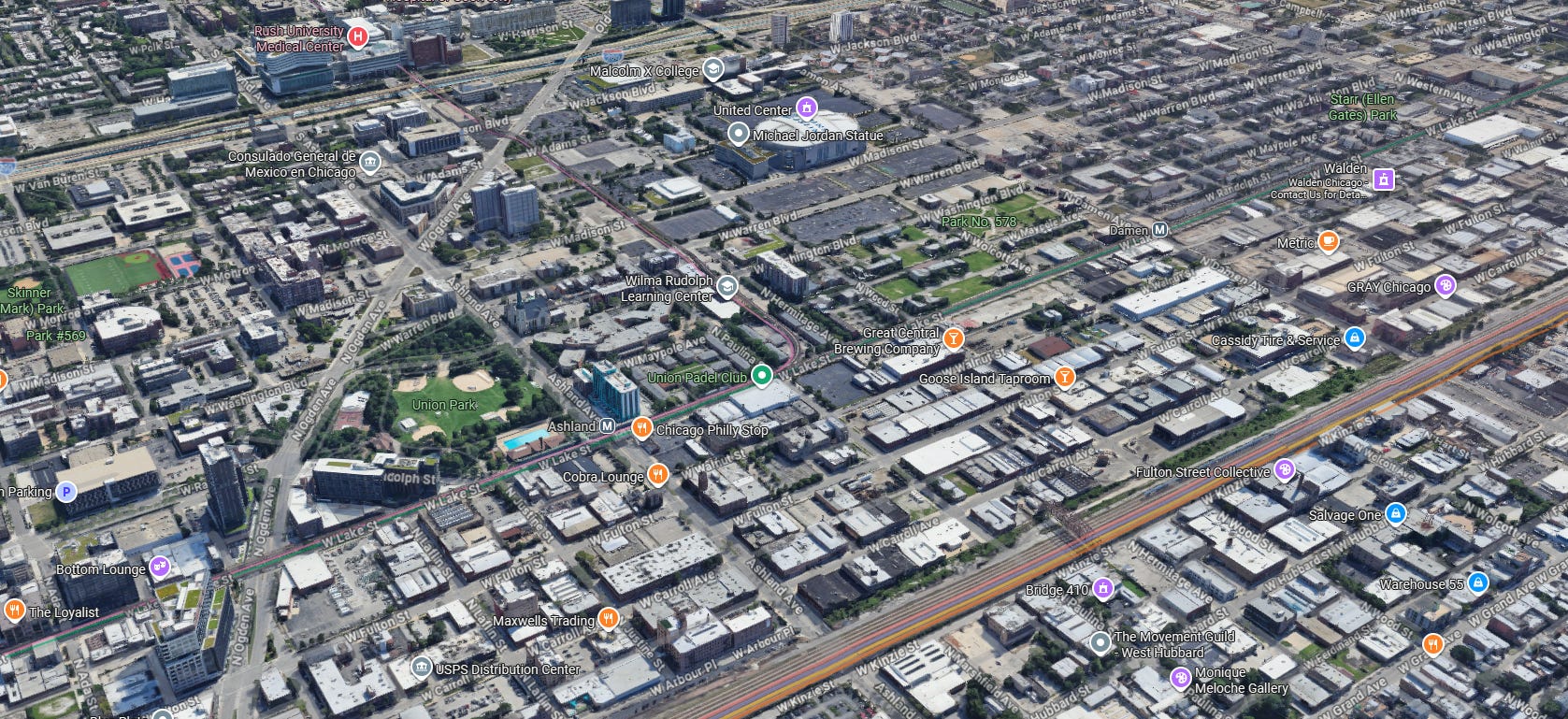
The 1901 Project
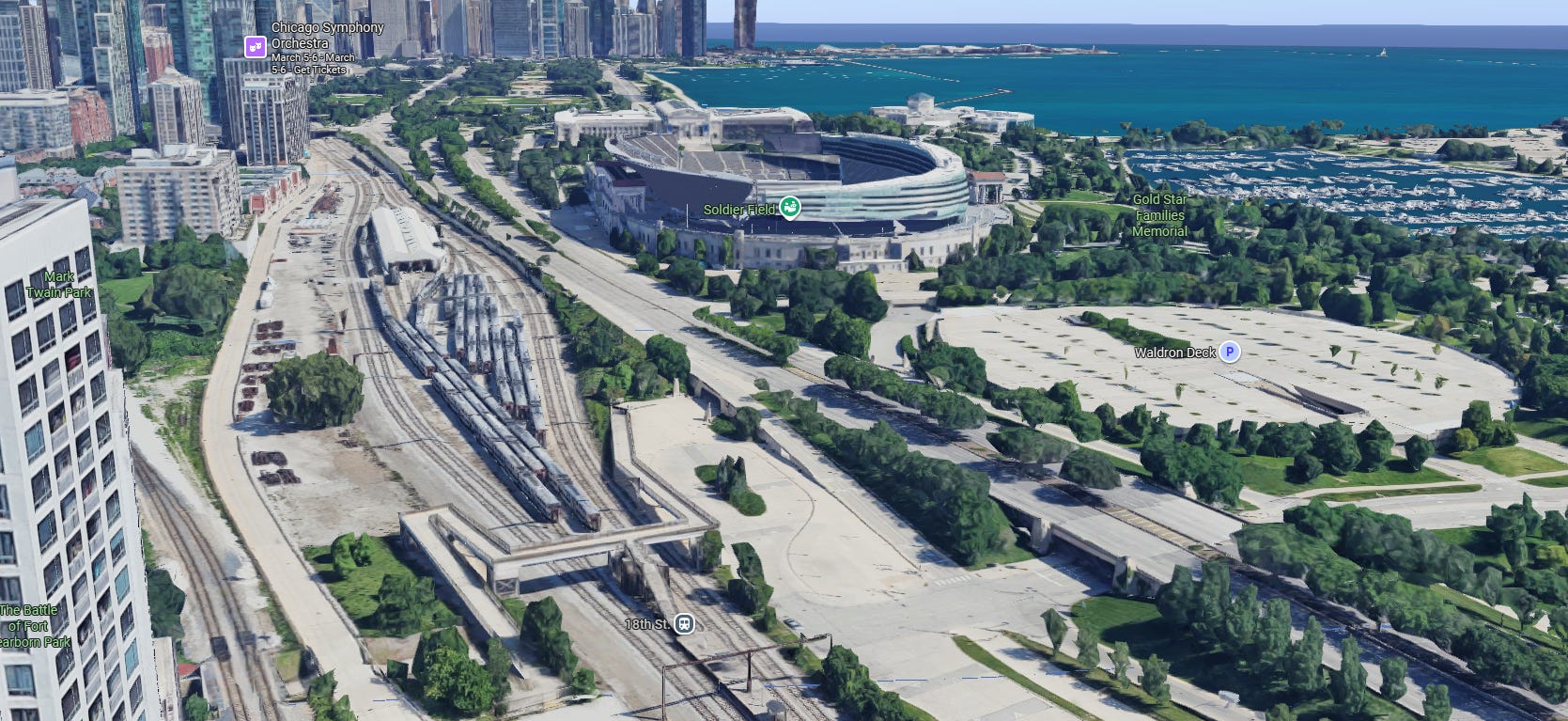
Soldier Field
Arlington Park
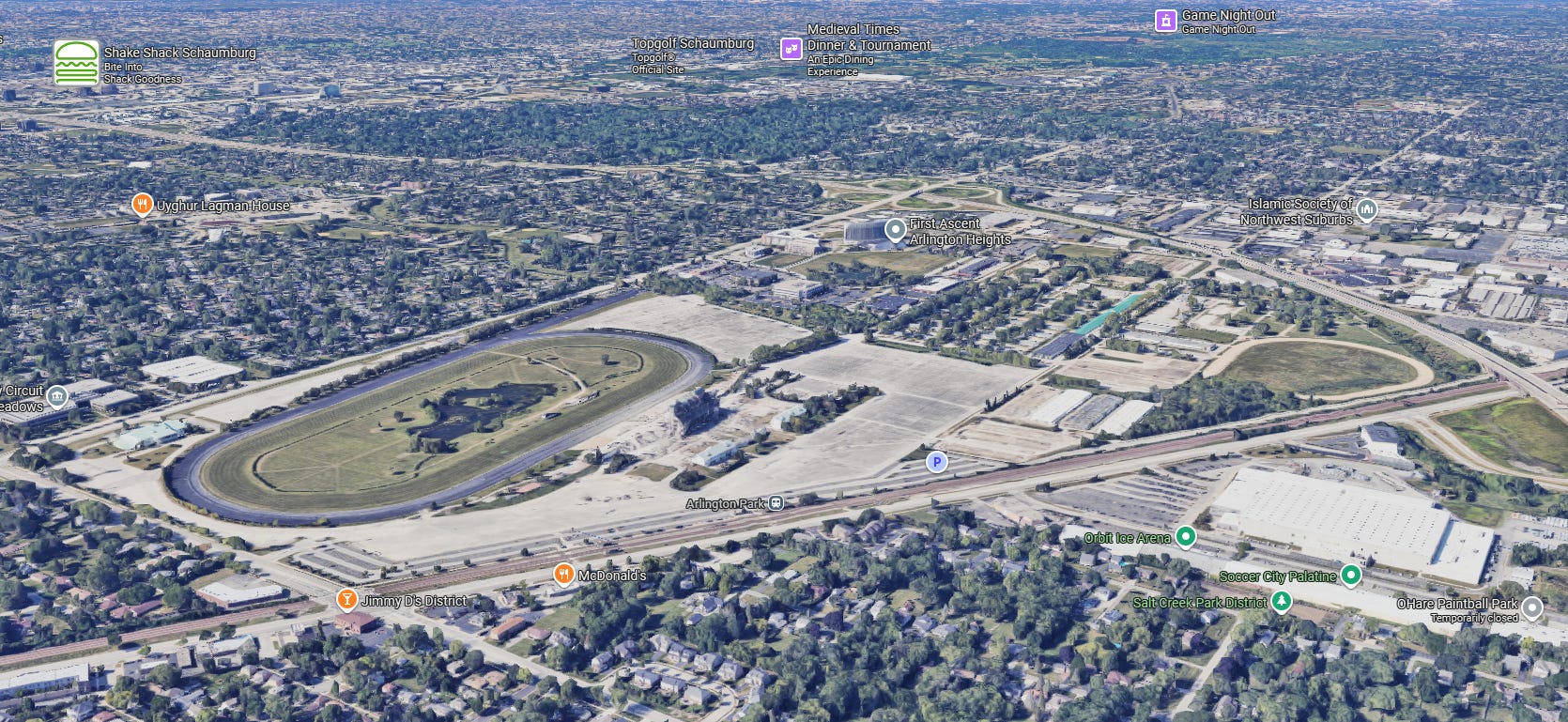
Strategically investing in infrastructure to support and leverage private investment is a smart move for the public sector, especially if those infrastructure investments are proactively coordinated, seamlessly integrated with the regional network, and will provide all-day, seven-days-a-week, year-round benefits to Chicagoland residents, workers, shoppers, and visitors.
ONE Central’s transportation proposals didn’t pencil out at least partially because they largely failed to account for regional benefits. But, if the CHI-Line Shuttle instead looked something like this…

…and if these trains connected not only ONE Central and Union Station but also:
- Foundry Park (Clybourn)
- and The 78 (Roosevelt)
- and the Quantum Park (87th/Baltimore)
- and The 1901 Project (Ashland-Ogden)
- and Soldier Field (18th)
- and Arlington Park (Arlington Park)
- (and Northwestern University)
- (and O’Hare)
- (and the University of Chicago)
- (and Sox Park)
- (and… well, you get the idea.)
Regional rail is the megaproject’s megaproject: with a handful of strategic projects to connect the infrastructure we already have, we can stretch our public investments far beyond what was previously possible to better leverage private-sector capital throughout all of northeastern Illinois.
Strategic, transformative, ambitious-yet-attainable transit investments to unlock Chicagoland.
It’s time for CrossTowner regional rail. It’s time to #BuildTheTunnel.
More CrossTowner Regional Rail Resources
What is regional rail?
Why is regional rail right for Chicagoland?
How can we implement it?
- The revised transit proposal includes the previous “CHI-Line Circulator” bus corridor concept utilizing the McCormick Busway to connect ONE Central to Lakeshore East. In the interest of brevity, this post does not detail the Circulator, but additional detail can be found on pages 14-16 of the feasibility study. ↩︎
